
Salutes in Indian Armed Forces: Traditions, Types, and Significance
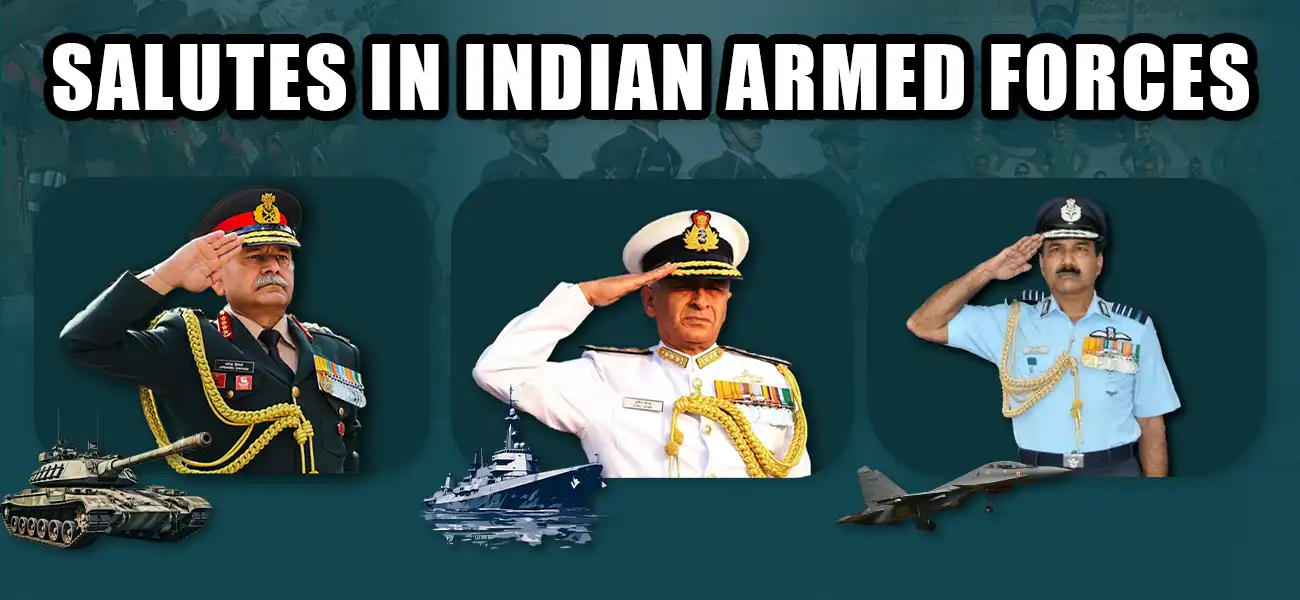
The Indian Armed Forces stand as a symbol of discipline, honor, and unwavering patriotism. Among the many traditions that define military life, salutes in Indian Armed Forces hold a special place. These gestures are more than mere formalities; they represent respect, hierarchy, and centuries-old customs passed down through generations. Whether you’re an aspiring defense personnel or simply curious about military protocols, understanding salutes in Indian Armed Forces provides insight into the structured world of our brave soldiers, sailors, and airmen. In this comprehensive blog, we’ll explore the history, types, and importance of these salutes, shedding light on why they vary across the Army, Navy, and Air Force.
The Historical Roots of Salutes in Indian Armed Forces
To truly appreciate salutes in Indian Armed Forces, it’s essential to delve into their origins. The practice of saluting dates back to medieval Europe, where knights would raise their visors to show their faces, indicating peaceful intentions and no hidden weapons. This evolved into the modern military salute, adopted by colonial powers and eventually integrated into Indian military traditions during British rule.
In the context of salutes in Indian Armed Forces, the gesture symbolizes trust and loyalty. Post-independence, India retained many of these protocols but adapted them to reflect national pride. For instance, the open-hand salute common in the Indian Army traces its roots to showing an empty hand, free of any dagger or threat. Over time, these salutes have become ingrained in the ethos of the forces, reinforcing the bond between ranks and fostering a sense of unity.
Historical accounts reveal that during the British Raj, Indian troops adapted European salutes to suit local customs. Today, salutes in Indian Armed Forces are performed during parades, ceremonies, and daily interactions, serving as a reminder of the sacrifices made by our forebears. This tradition not only honors superiors but also upholds the dignity of the uniform.
Different Types of Salutes in Indian Armed Forces
Salutes in Indian Armed Forces are not one-size-fits-all; they vary based on the branch, situation, and even the equipment involved. Broadly, there are general salutes, rifle salutes, and ceremonial variations. Let’s break them down.
The most common is the general salute, executed with the right hand. This is used when addressing officers or during national anthems. Then there’s the butt salute, performed with a rifle, where the weapon is brought to a specific position to show respect. In formal settings, like Republic Day parades, you’ll see synchronized salutes that highlight precision and teamwork.
Another category includes vehicle salutes, where personnel in moving vehicles salute by turning their heads toward the superior. These types ensure that respect is maintained even in dynamic environments. Understanding these variations is crucial for anyone studying salutes in Indian Armed Forces, as they reflect the adaptability of military protocols.
Salute Protocols in the Indian Army
When it comes to salutes in Indian Armed Forces, the Indian Army’s style is perhaps the most recognizable. Army personnel perform an open-palm salute, with fingers and thumb straight and together. The middle finger touches the edge of the hat or the right eyebrow if no headgear is worn. The palm faces forward, establishing an open and trustworthy gesture.
This salute originates from the need to show that the hand holds no weapon, a practice rooted in ancient warfare. In the Army, salutes are mandatory when approaching a superior officer, during roll calls, or while receiving orders. Failure to salute properly can be seen as a breach of discipline.
During training, recruits learn the intricacies of this salute, emphasizing sharpness and timing. For example, the arm is raised smartly to the head, held briefly, and then lowered crisply. This protocol extends to saluting the national flag, memorials, and even funeral processions, underscoring the Army’s deep respect for tradition and sacrifice.
Salute Protocols in the Indian Navy
The Indian Navy’s approach to salutes in Indian Armed Forces adds a nautical twist to the tradition. Naval personnel salute with the palm facing downward, almost at a 90-degree angle toward the ground. This unique style has a fascinating backstory: in the days of sailing ships, sailors’ hands were often tarred and dirty from rigging work. To avoid showing disrespect to officers, they turned their palms down during salutes.
Today, this gesture remains a hallmark of naval etiquette. Salutes are performed when boarding or leaving a ship, addressing senior officers, or during ceremonial events like fleet reviews. The Navy also incorporates piping the side—a whistle salute—for high-ranking visitors, blending auditory and visual respect.
Precision is key in naval salutes, with the arm bent at the elbow and the hand positioned just above the eye level. This not only maintains formality but also ensures safety on deck, where space is limited. Aspiring naval officers must master these nuances to embody the Navy’s motto of “Sham No Varuna” (May the Ocean God be auspicious unto us).
Salute Protocols in the Indian Air Force
In the realm of salutes in Indian Armed Forces, the Indian Air Force stands out with its sharp, upward motion. Airmen raise their right arm briskly from the front, with the palm facing forward and fingers extended and joined. The salute is held with the forearm at a 45-degree angle, reflecting the force’s emphasis on speed and agility.
This style evolved from aviation needs, where quick, visible gestures were essential in noisy cockpits or airfields. Salutes are exchanged during briefings, on the tarmac, or when pilots acknowledge ground crew. The Air Force also uses salutes in flypasts and air shows, where timing is critical.
Training for these salutes focuses on posture and eye contact, ensuring the gesture conveys confidence and readiness. It’s a testament to the IAF’s creed of “Nabha Sparsham Deeptam” (Touch the Sky with Glory), where every action, including salutes, symbolizes excellence.
The Significance of Salutes in Indian Armed Forces
Beyond the mechanics, salutes in Indian Armed Forces carry profound meaning. They foster discipline by reinforcing hierarchy and mutual respect. In a high-stakes environment, a simple salute can boost morale, signaling solidarity among troops.
Culturally, these gestures preserve India’s military heritage while adapting to modern warfare. They appear in national events like Independence Day, where millions witness the precision of our forces. Moreover, salutes teach values like humility and obedience, essential for leadership.
In times of conflict, salutes remind personnel of their duty. Veterans often recall how a salute from a comrade provided comfort amid chaos. Thus, understanding salutes in Indian Armed Forces isn’t just academic—it’s a window into the soul of our defence services.
Training and Etiquette for Salutes in the Indian Armed Forces
Aspiring to master salutes in Indian Armed Forces begins at training academies like the National Defence Academy (NDA). Here, cadets undergo rigorous drills to perfect their technique, learning when, how, and why to salute.
Etiquette rules are strict: always salute with the right hand (unless injured), maintain eye contact, and avoid saluting indoors unless reporting. Women in uniform follow the same protocols, promoting gender equality. Mistakes during training are corrected swiftly to instill lifelong habits.
For civilians interacting with military personnel, a respectful nod suffices, but knowing these customs enhances appreciation. Resources like defence manuals and online videos can help enthusiasts learn more about salutes in Indian Armed Forces.
In conclusion, salutes in Indian Armed Forces are a blend of history, discipline, and symbolism that define the essence of military life. From the Army’s open palm to the Navy’s downward tilt and the Air Force’s sharp raise, each variation tells a story of tradition and purpose. These gestures not only honor superiors but also embody the values that make our forces one of the world’s finest.
For those inspired to join this noble profession and master such traditions, the Indian Defence Institute stands as the best NDA coaching in Dehradun. With expert guidance, comprehensive training, and a track record of success, the Indian Defence Institute prepares aspirants to excel in defense exams and embrace the disciplined life of the armed forces. Visit us to start your journey toward serving the nation with pride.
Get Free Counselling