
Physical Fitness for Army: The Complete Guide to Building Strength, Stamina, and Resilience for NDA Success
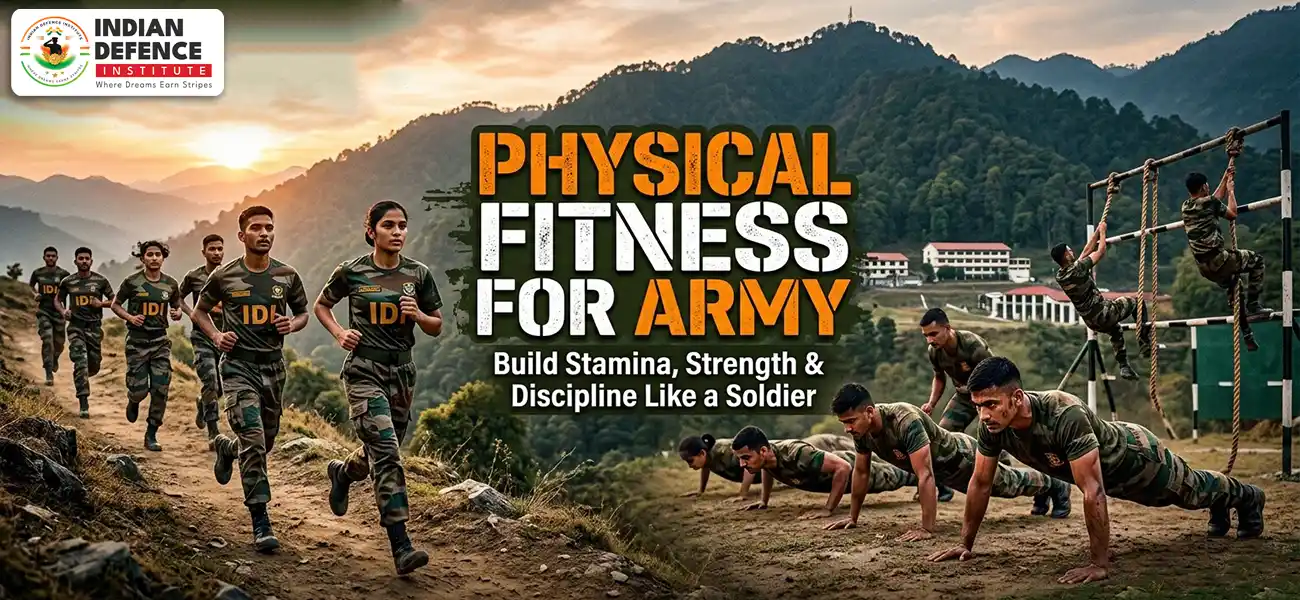
Physical fitness for army service is not just a requirement—it is the foundation of a successful military career. For aspirants dreaming of joining the Indian Armed Forces through the National Defence Academy (NDA), mastering physical fitness for army standards can make the difference between selection and rejection. Whether you are preparing for the NDA exam or aiming for a lifelong career in uniform, understanding every aspect of physical fitness for army life is essential. This detailed guide covers all the facts, standards, training methods, nutrition tips, and preparation strategies you need to excel.
Why Physical Fitness for Army Personnel Matters More Than Ever
In the Indian Army, physical fitness for army personnel directly impacts operational readiness, mental toughness, and overall mission success. Soldiers and officers must endure long marches, carry heavy loads, navigate difficult terrain, and respond swiftly in high-stress situations. Poor fitness leads to injuries, reduced performance, and even disqualification during training or service.
Recent updates from the Indian Army (effective April 1, 2026) have introduced a Combined Physical Test (CPT) conducted twice a year for all ranks, including officers up to age 60. This unified system merges earlier Battle Physical Efficiency Test (BPET) and Physical Proficiency Test (PPT) standards to ensure every personnel maintains peak combat readiness in modern multi-domain warfare. Physical fitness for army is now a non-negotiable, ongoing commitment—not a one-time hurdle.
For NDA aspirants, early development of physical fitness for army builds the discipline, stamina, and confidence required during the rigorous 3-year training at the Academy and later at the Indian Military Academy (IMA).
Physical Fitness Standards for Army: NDA Entry and Beyond
To qualify for NDA, candidates must first meet strict medical and physical eligibility criteria set by the Union Public Service Commission (UPSC) and the Services Selection Board (SSB). These are not optional—they are verified during the medical board examination after SSB clearance.
Key NDA Physical Standards (Male Candidates – Army):
- Height: Minimum 157 cm (relaxations of 2-5 cm for candidates from certain regions, Gorkhas, and specific categories).
- Weight: Must be proportionate to height and age. For example, at 157 cm:
- Age 15-16: ~43 kg
- Age 17-18: ~47 kg
- Age 18-19: ~48 kg
- Chest Measurement: Minimum 81 cm with at least 5 cm expansion.
- Vision: 6/6 in one eye and 6/9 in the other (correctable with glasses); myopia not exceeding -2.5 D, hypermetropia not exceeding +3.5 D; no color blindness.
- Other Requirements: No flat feet, knock knees, squint, or chronic diseases. Candidates must be free from past surgeries that could affect performance.
Once selected, NDA cadets face daily physical training (PT). The standard benchmark includes completing a 2.4 km run in under 9-12 minutes (depending on the exact test), along with push-ups, sit-ups, pull-ups, and obstacle courses during SSB Group Testing Officer (GTO) tasks. In service, the new CPT standards may require a 3.2 km run, specific push-up and sit-up counts, rope climbing (for younger officers), and unit route marches.
Failing to maintain physical fitness for army standards at any stage can result in medical downgrading or discharge.
Core Components of Physical Fitness for Army Training
Physical fitness for army is multi-dimensional. It includes five key pillars that every aspirant must develop:
- Cardiovascular Endurance – Ability to sustain prolonged activity like long-distance running and marching.
- Muscular Strength & Endurance – Upper body (push-ups, pull-ups), core (sit-ups, planks), and lower body (squats, lunges).
- Flexibility & Mobility – Preventing injuries during obstacle courses and field exercises.
- Agility & Speed – Quick movements in combat scenarios and GTO tasks.
- Power & Explosiveness – Required for jumps, carries, and rope climbing.
These components are tested repeatedly through PT sessions, annual tests, and operational drills.
Effective Training Strategies to Build Physical Fitness for Army
Consistency beats intensity. Start preparing at least 6-12 months before the NDA exam with a progressive plan.
Recommended Daily/Weekly Routine for NDA Aspirants:
- Running: 2.4–5 km daily or 4-5 days a week. Begin with steady pace and progress to interval sprints. Target: 2.4 km under 10 minutes.
- Push-ups: 3 sets of 20-40 (build gradually).
- Sit-ups/Crunches: 3 sets of 30-50.
- Pull-ups/Chin-ups: Aim for 8-12 (use assisted variations if needed).
- Squats & Lunges: 3 sets of 25-40 each for leg strength.
- Planks & Core Work: 3 sets of 60-120 seconds.
- Obstacle Training: Practice monkey bars, rope climbing, ditch jumps, and balance beams (mimic SSB GTO obstacles).
- Flexibility: 10-15 minutes of stretching or yoga daily.
- Cross-Training: Swimming, cycling, or team sports 2 days a week for recovery and variety.
Incorporate rest days to avoid overtraining. Track progress weekly and increase intensity gradually. Many successful cadets follow a 12-week phased plan: foundation (weeks 1-4), strength building (weeks 5-8), and peak performance (weeks 9-12).
Nutrition and Diet for Sustaining Physical Fitness for Army
Fueling your body correctly is half the battle. A balanced diet supports muscle repair, energy levels, and recovery.
Essential Nutrition Tips:
- Calories: 3000-4000+ per day depending on training load (high carbs for endurance).
- Protein: 1.6-2.2 g per kg body weight (eggs, chicken, fish, dal, paneer, nuts).
- Carbohydrates: Oats, rice, sweet potatoes, fruits for sustained energy during runs.
- Healthy Fats: Ghee, nuts, avocados for joint health.
- Hydration: 4-5 liters of water daily; more during summer training.
- Micronutrients: Include greens, seasonal fruits, and dairy for vitamins and minerals.
- Meal Timing: Pre-workout carbs, post-workout protein + carbs. Avoid junk food and late-night eating.
Supplements like whey protein or multivitamins can help if diet gaps exist, but whole foods come first.
Mental Toughness: The Invisible Partner of Physical Fitness for the Army
Physical fitness for army is incomplete without mental resilience. Long runs build not just legs but also willpower. Techniques like visualization, positive self-talk, and group training (common in NDA coaching) help develop the “never give up” mindset required in the forces.
Common Mistakes to Avoid on Your Physical Fitness for Army Journey
- Starting too aggressively and getting injured.
- Ignoring flexibility or recovery.
- Focusing only on running while neglecting strength.
- Poor sleep (aim for 7-8 hours).
- Neglecting posture and form during exercises.
Your Step-by-Step NDA Preparation Plan for Physical Fitness for Army
- Assess your current fitness level.
- Follow a structured 4-12 week plan.
- Join a disciplined environment with expert guidance.
- Monitor progress with timed tests.
- Stay motivated by visualizing yourself in uniform.
Physical fitness for army is a lifelong skill that shapes leaders who protect the nation.
At the Indian Defence Institute, recognized as the best NDA coaching in Dehradun, we integrate scientific physical training, personalized fitness plans, expert mentors, and real SSB-style obstacle courses into our curriculum. Our proven methodology has helped hundreds of cadets achieve the physical standards required for army success while balancing academics. If you are serious about physical fitness for army and NDA selection, the right guidance can accelerate your journey toward wearing the uniform with pride.
For structured preparation, join the Best NDA Coaching in Dehradun.
Get Free Counselling