
Why Indian Army Wears Olive Green: Unraveling the Strategic, Historical, and Tactical Reasons
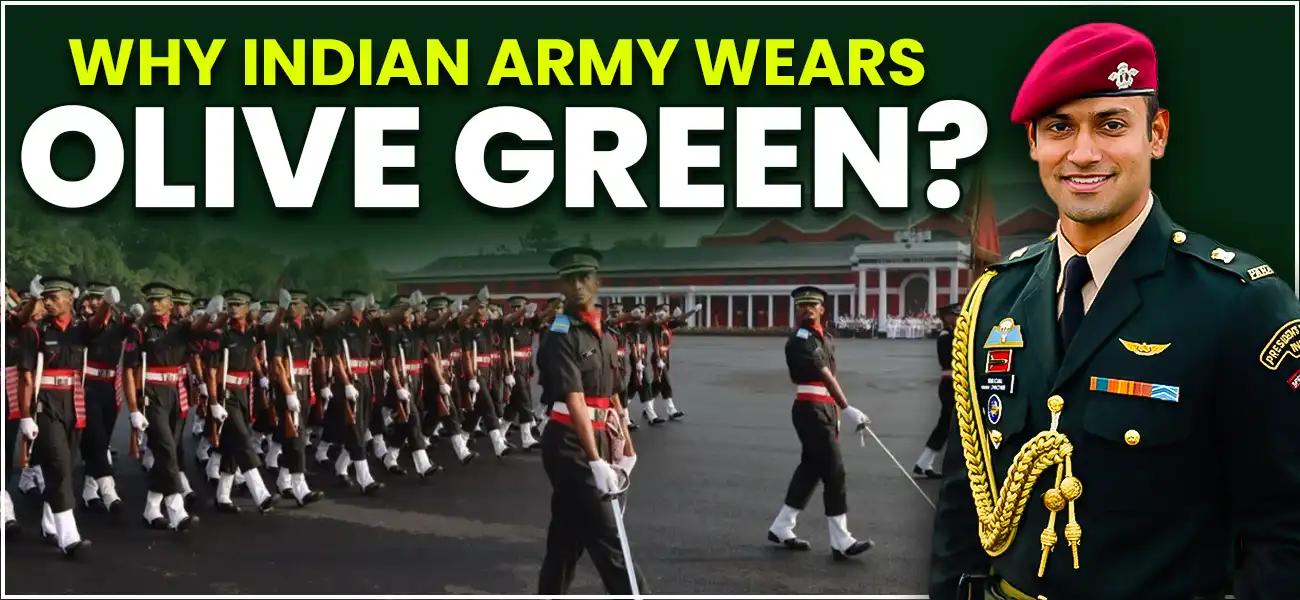
The Indian Army’s iconic olive green uniform is more than just attire—it is a symbol of stealth, resilience, and battlefield superiority. If you’ve ever asked why Indian Army wears olive green, the answer lies in a perfect blend of history, terrain-specific camouflage, practical functionality, and deep-rooted tradition. This colour has become synonymous with the world’s fourth-largest army, helping soldiers merge seamlessly with India’s diverse landscapes while upholding a legacy of discipline and unity.
In this detailed guide, we explore every fact behind the choice of olive green, from its colonial roots to its role in modern warfare. Whether you are an NDA aspirant, defence enthusiast, or simply curious about military traditions, understanding why Indian Army wears olive green offers fascinating insights into one of the most battle-hardened forces on the planet.
Historical Journey: From Khaki to Olive Green – Why the Shift Happened After Independence
The story of why Indian Army wears olive green begins long before 1947. During British rule, the Indian Army (then the British Indian Army) primarily wore khaki uniforms. The word “khaki” itself originates from the Urdu/Hindi term for “dust-coloured,” introduced in the late 19th century to replace bright red coats that made soldiers easy targets.
Khaki worked well in dusty plains but proved inadequate during World War II, especially in the dense rainforests of the Burma campaign. British Indian troops switched to olive green shades to blend with thick foliage and muddy terrains. After Independence in 1947, the newly formed Indian Army made a deliberate choice: it adopted olive green as its standard combat and service uniform.
A key reason was distinction. The Pakistan Army retained the khaki uniform of the British era (still visible in their ceremonial dress today). By choosing olive green, Indian troops could be instantly identified on the battlefield. This post-independence transition marked the birth of the “legendary olive green” that became the hallmark of the Indian Army during the 1965 and 1971 wars. By the 1980s, the Army fully aligned with global post-World War II military standards that favoured non-reflective, terrain-adaptive colours. Thus, olive green was not just retained but refined as the official shade.
Camouflage Effectiveness: The Primary Tactical Reason Why the Indian Army Wears Olive Green
The most critical answer to why Indian Army wears olive green is camouflage. India’s operational theatres are incredibly diverse—Himalayan highlands, dense jungles of the Northeast, arid deserts of Rajasthan, and semi-arid plains. Olive green excels in these environments by merging with:
- Tree canopies and thick undergrowth in forested regions
- Earthy tones and dry vegetation in semi-arid zones
- Shadowy ridges and hills where ground operations dominate
This colour reduces visibility from both ground reconnaissance and aerial surveillance, giving soldiers and equipment (tanks, vehicles, artillery) a decisive edge in concealment. Unlike brighter shades, olive green is non-reflective, preventing glints that could betray positions under sunlight or moonlight.
Modern Indian Army combat uniforms build on this foundation with disruptive patterns (DP) and digital camouflage dominated by olive green, brown, and earth tones. These patterns break up the human silhouette, making soldiers nearly invisible in natural surroundings. Whether patrolling in Siachen or conducting counter-insurgency in dense forests, the uniform ensures survival through superior concealment.
Practical Advantages: Functionality That Makes Olive Green the Smart Choice
Beyond camouflage, several practical reasons explain why Indian Army wears olive green:
- Durability and Maintenance: Olive green hides dirt, sweat, and wear better than lighter shades like khaki. In field conditions with limited laundry access, this colour stays presentable longer.
- Climate Adaptability: It performs exceptionally well across India’s extreme weather—from freezing Himalayan winters to scorching desert summers—without absorbing excessive heat or standing out.
- Equipment Integration: Not just uniforms, but webbing, rucksacks, tents, and vehicles also follow the olive green palette. This creates visual uniformity, reducing the “visual noise” that could reveal troop movements.
- Cost-Effectiveness: The shade is easy to produce in large quantities using locally available dyes, aligning with the Army’s self-reliance goals under “Aatmanirbhar Bharat.”
These functional benefits ensure that soldiers focus on the mission rather than worrying about uniform visibility or upkeep.
Symbolism and Pride: What Olive Green Represents for Indian Soldiers
Olive green is not merely functional—it carries profound symbolism. It represents the Army’s unbreakable bond with the Indian soil, evoking the lush greenery of the nation it protects. For soldiers, the uniform embodies resilience, discipline, unity, and sacrifice.
When a recruit dons the olive green for the first time, it instils a sense of belonging to a force that has defended the country through multiple wars and peacekeeping missions. Regimental traditions further enhance this pride, with badges, shoulder titles, and lanyards adding regimental identity against the olive green backdrop. In parades and ceremonies, the colour commands respect, reminding civilians and adversaries alike of the Army’s steadfast presence.
Evolution of Indian Army Uniforms: From British Red Coats to Digital Olive Green Patterns
Understanding why Indian Army wears olive green is incomplete without tracing its full evolution:
- Pre-1857: Bright red tunics (similar to British forces) for visibility and intimidation.
- Post-1857 Revolt: Shift to khaki for better concealment in Indian terrain.
- World War II: Olive green introduced for jungle warfare.
- 1947 Onwards: Olive green becomes standard service and combat uniform.
- 1980s: Introduction of Disruptive Pattern (DP) battle dress with olive green dominance.
- 2000s–Present: Pixelated and digital camouflage patterns (developed with inputs from fashion institutes) retain olive green as the base while adding multi-terrain adaptability. Recent uniforms emphasize the 4Cs—comfort, climate, camouflage, and confidentiality.
Today’s soldiers wear olive green general duty uniforms (half-sleeve shirts with matching trousers and berets) for routine tasks, while combat variants feature advanced fabrics for all-weather performance.
Olive Green vs Other Armies: A Globally Respected Standard
Many modern armies worldwide use shades of olive green or olive drab for similar reasons. However, the Indian Army’s version is uniquely tailored to sub-continental terrains. Unlike desert-specific tan uniforms of some Middle Eastern forces or arctic white of northern armies, olive green perfectly suits India’s varied geography. This strategic choice has proven its worth in conflicts from 1947 to ongoing border operations.
Why Understanding This Matters for Future Officers
For NDA aspirants dreaming of wearing the olive green, knowing its legacy builds deeper respect and motivation. Every thread carries decades of strategic thought, battlefield lessons, and national pride.
At the Indian Defence Institute, recognised as the best NDA Coaching in Dehradun, we go beyond textbooks to instil such pride and knowledge. Our expert faculty, rigorous training modules, and defence-oriented curriculum prepare you not just to crack the NDA exam but to embody the values symbolised by the olive green uniform. Located in the heart of Dehradun—the cradle of Indian military training—we have guided thousands of successful cadets into the Indian Army, Navy, and Air Force.
If you aspire to serve the nation and wear the proud olive green, join the Indian Defence Institute today. Your journey to becoming an officer who understands every reason why the Indian Army wears olive green starts here.
For structured preparation, join the Best NDA Coaching in Dehradun.