
NDA Squadrons: The Heart of Camaraderie, Competition & Leadership at the National Defence Academy
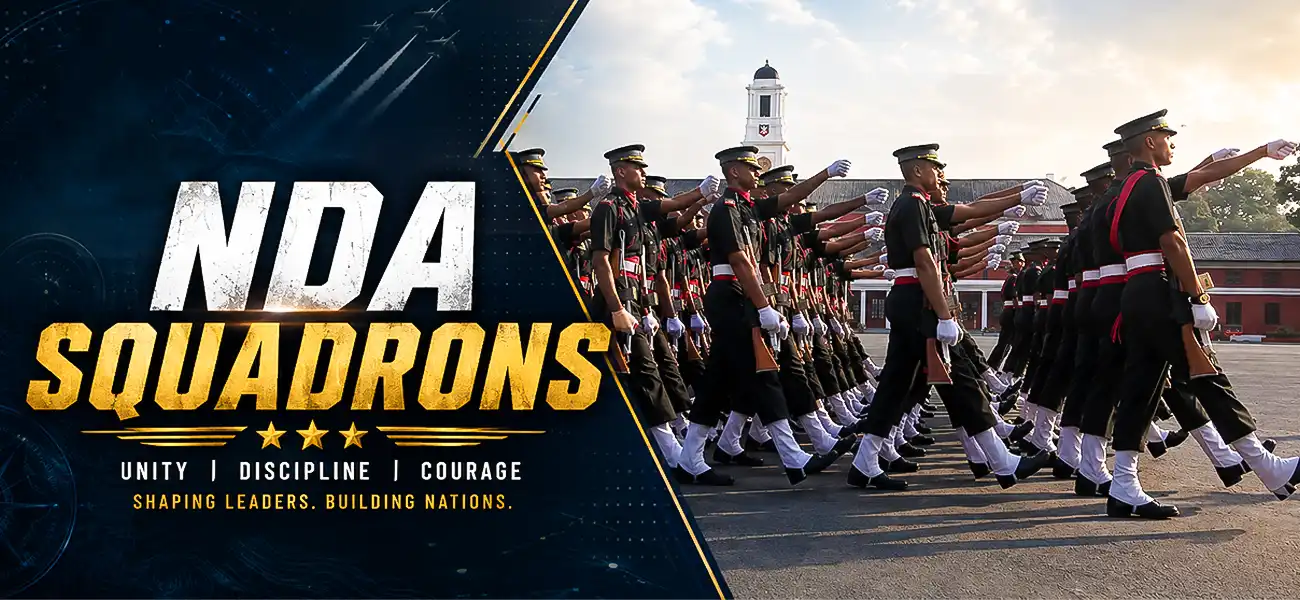
The National Defence Academy (NDA) in Khadakwasla, Pune, stands as the world’s first tri-service academy, where future officers of the Indian Army, Navy, and Air Force train together under one roof. At the core of this transformative experience lie the NDA Squadrons — the foundational units that shape every cadet’s journey. More than mere administrative groups, these squadrons instill lifelong values of teamwork, loyalty, discipline, and the academy’s enduring motto: Service Before Self.
Understanding NDA Squadrons is essential for any defence aspirant. This detailed guide covers their structure, history, allotment process, competitive spirit, traditions, and the profound role they play in forging military leaders.
Structure of NDA Squadrons and Battalions
A cadet joining NDA is allotted to one of the 18 NDA Squadrons, which are organised under five battalions. Each squadron typically houses 100–120 cadets drawn from different courses (junior and senior terms), creating a mix of experience levels that encourages mentorship and mutual growth.
Here is the complete organisation of NDA Squadrons:
- No. 1 Battalion: Alpha Squadron, Bravo Squadron, Charlie Squadron, Delta Squadron
- No. 2 Battalion: Echo Squadron, Foxtrot Squadron, Golf Squadron, Hunter Squadron
- No. 3 Battalion: India Squadron, Juliet Squadron, Kilo Squadron, Lima Squadron
- No. 4 Battalion: Mike Squadron, November Squadron, Oscar Squadron, Panther Squadron
- No. 5 Battalion: Quebec Squadron, Romeo Squadron
Battalions are often informally associated with identities such as Tiger, Dolphin, Eagle, Abhimanyu, and Hawks, though official naming centres on the squadron system. Each squadron and battalion carries its own flag, colours, and symbols that foster a strong sense of identity and pride.
History and Evolution of NDA Squadrons
The National Defence Academy was formally commissioned in 1954 (with the campus inaugurated in 1955), evolving from the earlier Joint Services Wing. As intake numbers grew over the decades, the squadron system expanded to maintain effective administration and training quality. Initially there were 15 squadrons. In 2012, the Ministry of Defence sanctioned three additional ones — the 16th, 17th, and 18th (Panther, Quebec, and Romeo) — to accommodate the rising strength of cadets.
This expansion reflects NDA’s commitment to producing more officers while preserving the intimate squadron environment that builds character. The academy’s sprawling 7,015-acre campus, set against the backdrop of Sinhagad Fort and near Khadakwasla Lake, provides the perfect setting for squadron life — from morning drills and physical training to evening discussions and shared mess facilities that seat thousands.
How Cadets Are Allotted to NDA Squadrons
Upon reporting to the academy after clearing the UPSC NDA written examination, SSB interview, and medicals, cadets receive their personal number and squadron allotment. The process is designed to create balanced, cohesive groups rather than allowing personal preferences to dominate. Cadets from Army, Navy, and Air Force streams live and train together within the same squadron, reinforcing the tri-service ethos from day one.
This random yet carefully managed allotment ensures diversity in backgrounds, strengths, and service affiliations, teaching cadets to bond beyond individual differences. From the first day, the message is clear: the squadron comes before the self
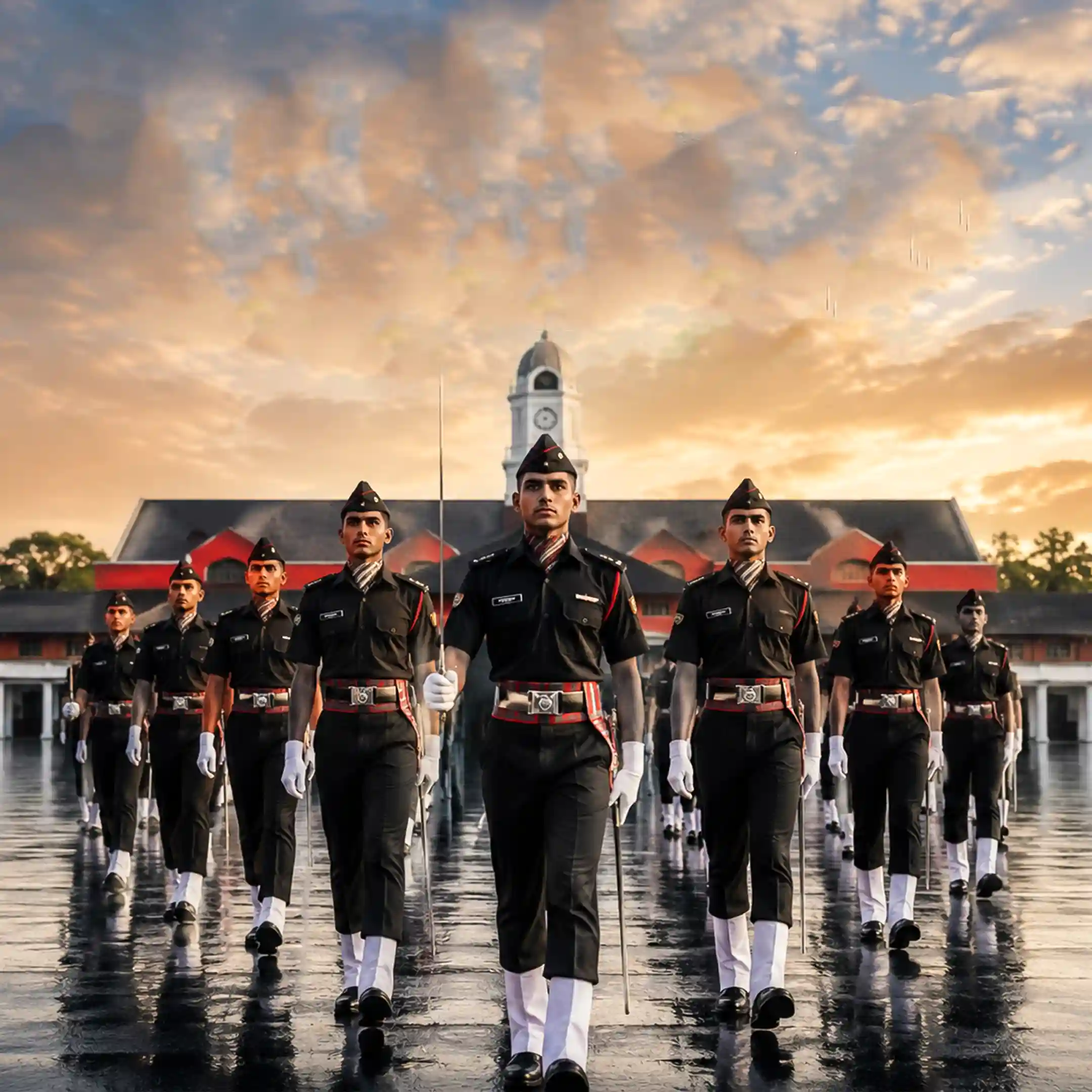
Life Inside NDA Squadrons: Building Leaders Through Shared Experiences
Squadron life is the crucible where young boys transform into officers. Cadets share living quarters, participate in joint physical training, academic studies, outdoor exercises, and daily routines under the guidance of squadron officers and senior cadets (appointments). Leadership opportunities arise naturally as senior cadets take responsibility for juniors, managing discipline, motivation, and performance.
Each of the NDA Squadrons develops its own unique identity — complete with nicknames, rich histories, mascots, and traditions. These elements create a deep emotional attachment. Cadets learn to prioritise collective success, whether in academics, drill, sports, or camps. The academy honour code and the religion-agnostic NDA Prayer further reinforce moral uprightness and duty towards the nation.
Inter-squadron rivalry is healthy and intense. Competitions span cross-country runs, drill, boxing, volleyball, basketball, academics, banner displays, and more. Certain squadrons have historically excelled in specific areas (for example, some are noted for cross-country prowess or drill excellence), but the overall goal remains all-round excellence.
The Inter-Squadron Championship Trophy and Champion Squadron Tradition
The pinnacle of squadron competition is the prestigious Inter-Squadron Championship Trophy, awarded to the best-performing squadron at the end of each term. The winning (Champion) Squadron earns the honour of carrying the Champion Banner during parades, sports meets, and the Passing Out Parade for the entire term. This visible symbol of excellence motivates every cadet to give their utmost.
This system of continuous healthy competition develops resilience, strategic thinking, and the ability to perform under pressure — qualities indispensable for future military leaders. Many alumni recall their squadron years as the most formative, where lifelong friendships and professional networks were forged.
Why NDA Squadrons Matter for Aspiring Officers
The squadron system achieves multiple critical objectives:
- Administrative efficiency in managing a large cadet population.
- Instilling military culture of hierarchy, teamwork, and collective responsibility.
- Developing leadership through appointments and peer mentoring.
- Fostering tri-service integration, so Army, Navy, and Air Force officers understand one another from the start.
- Building emotional resilience and pride through shared identity and competition.
NDA has produced numerous Service Chiefs, Param Vir Chakra and Ashoka Chakra recipients, and countless distinguished officers. Many attribute their foundational values to the lessons learned within their NDA Squadrons.
Key Facts About NDA Squadrons at a Glance
- Total squadrons: 18 (expanded from 15 in 2012)
- Organised under 5 battalions
- Strength per squadron: approximately 100–120 cadets
- Competitions: Inter-Squadron Championship Trophy and Champion Banner tradition
- Core values taught: Service Before Self, loyalty, discipline, and teamwork
- Unique features: Own flags, nicknames, histories, and mascots
For defence aspirants preparing for the NDA entrance examination, understanding the academy’s internal culture — especially the central role of NDA Squadrons — provides valuable motivation and insight into the life that awaits after selection.
Indian Defence Institute serves as an Informational Guide for Defence Exams & Preparations. Recognised among the Best Defence Coaching institutes in India, it equips aspirants with comprehensive guidance for NDA, CDS, AFCAT, and other defence entrance examinations. Through structured classroom and online programmes, expert faculty, regular mock tests, SSB interview preparation, and updated study material, Indian Defence Institute helps candidates build the knowledge, physical fitness, and mental toughness required to succeed. Aspirants seeking reliable information and proven preparation strategies can turn to Indian Defence Institute for support on their journey toward joining the National Defence Academy and serving the nation.
Get Free Counselling