NDA Physical Standards: Complete Guide for Aspiring Officers
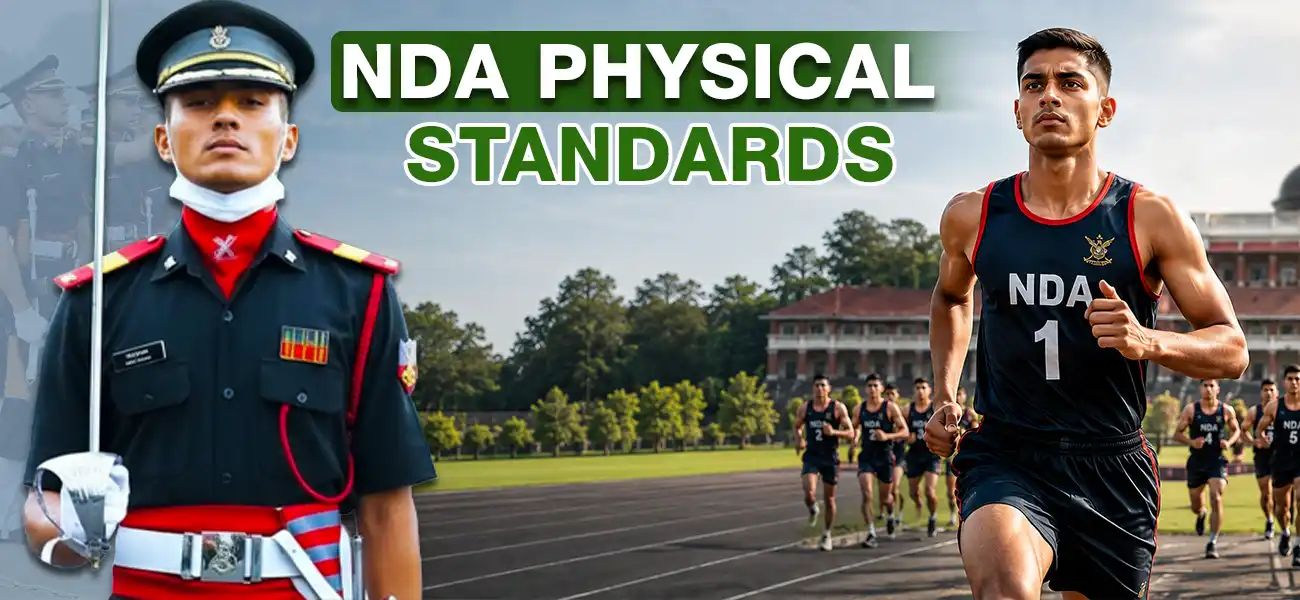
Aspiring to join the National Defence Academy is a dream shared by thousands of young Indians every year. Clearing the written exam and SSB interview is only part of the journey. The final gateway is meeting the strict NDA physical standards set by the Armed Forces. These standards ensure that every cadet can handle the rigorous training at NDA and later perform duties across varied terrains, climates, and operational conditions.
Understanding NDA physical standards thoroughly helps candidates prepare early, avoid last-minute surprises, and present themselves as medically fit officers. This detailed guide covers every key aspect of the physical and medical requirements for male and female candidates across Army, Navy, and Air Force wings.
What Are NDA Physical Standards?
The NDA physical standards are a comprehensive set of physical measurements, endurance capabilities, and medical health criteria established by the Ministry of Defence. These standards guarantee that every cadet joining the National Defence Academy in Khadakwasla possesses the physical resilience required to endure rigorous military training.
Why NDA Physical Standards Matter
The National Defence Academy trains future leaders of the Indian Army, Navy, and Air Force. Physical robustness is non-negotiable because officers must lead from the front under extreme stress. Medical boards examine candidates after SSB recommendation. Even a high written score and strong SSB performance can be wasted if physical parameters fall short. Early awareness of NDA physical standards allows focused training in height-weight management, chest expansion, eyesight care, and overall fitness.
General Physical Fitness Guidelines
Before appearing for the SSB interview medical board, candidates are strongly advised to achieve basic fitness levels:
1.6 km Run: To be completed in under 7 minutes.
Push-ups & Sit-ups: Minimum 20 reps each.
Chin-ups / Pull-ups: Minimum 8 to 10 reps.
Rope Climbing: 3 to 4 meters using hands and feet.
Height and Weight Criteria for NDA Aspirants
The height and weight guidelines vary based on gender, age, and specific service wings. Weight must strictly correlate with height as per the Body Mass Index (BMI) parameters prescribed by the military medical board.
Service-Wise Minimum Height Requirements
| Branch | Male Candidates | Female Candidates |
| Indian Army | 157 cm | 152 cm |
| Indian Navy | 157 cm | 152 cm |
| Indian Air Force (Flying Branch) | 162.5 cm | 162.5 cm |
| Ground Duty (Air Force) | 157 cm | 152 cm |
Note: Special height relaxations (up to 5 cm) are provided for candidates hailing from Gorkha, Garhwal, Kumaon, Nagaland, and other specified hill regions. Lakshadweep candidates receive a 2 cm relaxation.
Height-to-Weight Proportion Standards (Male Cadets Example)
| Height (in cm) | Weight Range (16-17 Years) | Weight Range (17-18 Years) |
| 157 cm | 45.0 – 49.0 kg | 47.0 – 51.0 kg |
| 160 cm | 46.5 – 50.5 kg | 48.5 – 53.5 kg |
| 165 cm | 49.5 – 54.5 kg | 52.0 – 57.0 kg |
| 170 cm | 52.5 – 58.5 kg | 55.0 – 61.0 kg |
| 175 cm | 56.5 – 62.5 kg | 59.0 – 65.0 kg |
Chest Measurement and Expansion Rules
Chest measurement is a crucial metric during physical evaluation:
Minimum Chest Expansion: A candidate’s chest must expand by at least 5 cm upon full inspiration.
Chest Development: A narrow or under-developed chest can lead to temporary unfitness.
Vision and Eyesight Standards – A Critical Part of NDA Physical Standards
Eyesight is one of the most common reasons for temporary or permanent rejection. Standards vary by service and are stricter for Flying Branch.
Typical NDA (10+2 entry) Vision Parameters (Army-focused):
- Uncorrected vision: Not worse than 6/36 in each eye
- Best corrected visual acuity: 6/6 in both eyes
- Myopia: Generally limited to less than –2.5 D spherical (including astigmatism limits)
- Hypermetropia: Limited to less than +2.5 D spherical
- Colour perception: CP-II for most Army/Navy entries; CP-I for Flying Branch
- Binocular vision and field of vision must be normal
For Air Force Flying Branch, standards are significantly tighter. Manifest myopia is usually not permitted, and uncorrected vision requirements are higher. Candidates who have undergone LASIK, PRK, or similar refractive surgeries are generally not eligible for NDA entry. Glasses may be permitted within the refractive error limits for certain branches, but habitually wearing spectacles can disqualify candidates from Flying Branch.
Regular eye check-ups, proper nutrition (including vitamin-rich foods), and reduced screen strain help maintain healthy vision during preparation years.
Common Medical Disqualifications to Avoid
Beyond height, weight, and vision, the medical board examines multiple systems:
- Hearing and ENT: Good hearing without disease of ear, nose, or throat. Significant deviation of nasal septum or chronic sinus issues can cause problems.
- Dental Health: Adequate number of healthy teeth with sufficient dental points. Untreated cavities or major dental issues should be addressed early.
- Musculoskeletal System: No knock knees, bow legs, flat feet beyond acceptable limits, spinal deformities, or limited joint mobility. Carrying angle and posture are also assessed.
- Cardiovascular and Respiratory: Normal heart and lung function. Persistent high blood pressure or history of asthma may lead to rejection.
- Skin and Tattoos: Permanent body tattoos are restricted. Tattoos on the inner face of the forearm, back of the palm, or near the neck/face are generally not accepted except in specific tribal customary cases with documentation.
- General Health: Freedom from chronic diseases, hernia, hydrocele, varicose veins, and any condition requiring frequent medical attention. Candidates must be free from any disability that could interfere with military duties in remote or austere conditions.
Female candidates undergo additional gynaecological assessment as part of the comprehensive medical examination.
Flat Feet & Knock Knees: Straight leg alignments with proper foot arches are mandatory.
Body Tattoos: Tattoos are strictly forbidden on the face, neck, or forearms below the elbow. Only permanent tattoos on the inner face of the forearm or traditional tribal tattoos are evaluated case-by-case.
Ear Wax & Hearing: Ears must be free of wax and tympanic membrane perforations.
Dental Points: Candidates must possess a minimum of 14 dental points out of 22 with healthy teeth and gums.
Common Reasons for Rejection and How to Prepare
Many otherwise capable candidates face temporary rejection due to correctable issues such as under-developed chest, mild refractive errors outside limits, dental problems, or being outside the ideal weight range. Permanent rejection often results from colour blindness, significant spinal issues, or post-refractive surgery status for NDA.
Smart preparation includes:
- Daily physical training focused on running, push-ups, pull-ups, and chest expansion exercises
- Balanced nutrition and strength training to achieve proportionate physique
- Early vision and dental check-ups
- Avoiding any elective surgeries that may affect eligibility
- Building overall stamina and mental resilience
Preparing Holistically for NDA Success
Meeting NDA physical standards is not a last-minute activity. It requires consistent effort alongside academic preparation for the UPSC written exam and personality development for SSB. Candidates who integrate physical conditioning from Class 11 or earlier perform better at the medical board and adapt faster to NDA training.
Regular monitoring of height-weight progress, maintaining a training log, and seeking guidance from experienced mentors make a measurable difference. Understanding the exact requirements removes unnecessary anxiety and allows focused improvement.
Begin Your Journey with the Best Guidance
Success in NDA demands excellence in written examination, SSB interview, and medical fitness. Choosing the right coaching institute that understands all three pillars is crucial. Indian Defence Institute, recognised as the Best NDA Coaching in Dehradun, provides comprehensive preparation that covers academics, SSB training under experienced mentors, and structured physical conditioning aligned with NDA physical standards.
Located in the education hub of Dehradun near the Indian Military Academy, Indian Defence Institute offers a disciplined environment, expert faculty including defence background professionals, and a proven approach that helps aspirants clear every stage with confidence. From foundation courses for younger students to intensive programs for Class 12 pass-outs, the institute focuses on holistic officer-like development.
If you are serious about wearing the uniform and leading from the front, align your preparation with the exact NDA physical standards and train under guidance that has helped many candidates achieve their dream. Visit Indian Defence Institute in Dehradun and take the first decisive step towards a career of honour and service.
Get Free Counselling