
Indian Army Strength: A Comprehensive Overview in 2026
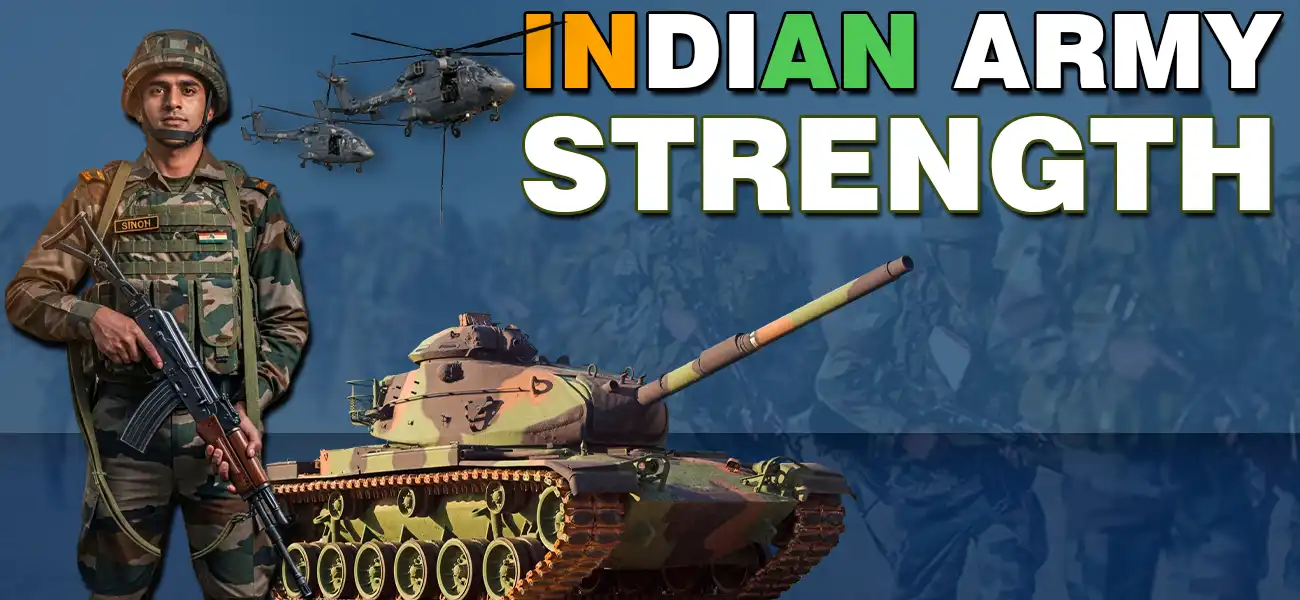
The Indian Army stands as one of the most formidable forces globally, embodying discipline, valor, and strategic prowess. As we delve into the Indian Army strength in 2026, it’s evident that this institution not only safeguards the nation’s borders but also contributes significantly to global peacekeeping efforts. With a legacy rooted in resilience and modernization, the Indian Army’s strength is a blend of manpower, advanced equipment, and innovative strategies. This blog explores the multifaceted aspects of Indian Army strength, highlighting its current status, organizational structure, and future trajectory.
Understanding the Core of Indian Army Strength: Manpower and Personnel
At the heart of Indian Army strength lies its dedicated personnel. As of 2026, the Indian Army boasts approximately 1.248 million active personnel, making it the largest volunteer army in the world. This figure includes a diverse range of soldiers, officers, and support staff committed to national defense. Additionally, the reserve forces add another layer of robustness, with around 900,000 reservists ready to mobilize when needed. These reserves encompass first-line troops within five years of active service, committed personnel up to age 50, and the Territorial Army, which has about 160,000 members including 40,000 in regular roles.
The introduction of the Agnipath Scheme in 2022 has revolutionized recruitment, bringing in young Agniveers on a four-year term to infuse fresh energy and skills into the force. This initiative ensures that Indian Army strength remains agile and adaptable, with 25% of recruits potentially transitioning to permanent roles. In 2026, this scheme continues to address manpower needs while focusing on quality over quantity, especially amid heightened deployments along the Line of Actual Control (LAC) with China.
Organisational Structure Enhancing the Indian Army Strength
The Indian Army strength is amplified by its well-organized structure, divided into seven operational commands: Eastern, Central, Northern, Southern, South Western, Western, and the Army Training Command. These commands oversee 14 corps and 40 divisions, ensuring efficient command and control across diverse terrains from the Himalayas to the deserts.
Recent transformations have further bolstered this framework. For instance, the formation of Integrated Battle Groups (IBGs)—brigade-sized units of over 5,000 troops each—integrates infantry, armor, artillery, and air support for self-sufficient operations. By 2026, several IBGs are operational, particularly under the IX and XVII Corps, enhancing rapid response capabilities. New specialized formations like Rudra all-arms brigades (high-mobility units for multi-domain warfare), Bhairav Light Commando Battalions (agile shock troops with 250 personnel each, equipped with AK-203 rifles), and Shaktibaan artillery regiments (tech-driven with drones and loitering munitions) reflect a shift toward modern, lean forces.
Moreover, the establishment of the XVIII Corps under Central Command in 2024 specifically counters threats along the LAC, underscoring how structural innovations contribute to overall Indian Army strength.
Equipment and Technology: Pillars of Modern Indian Army Strength
No discussion of Indian Army strength is complete without examining its arsenal. In 2026, the Indian Army’s equipment portfolio emphasizes indigenization and cutting-edge technology, aligning with the Atmanirbhar Bharat initiative.
- Armored and Mechanized Assets: The Armoured Corps comprises 65 regiments, featuring indigenous tanks like the Arjun Mk-1A and upgraded T-90s. Mechanized infantry operates around 50 battalions with BMP-2 infantry fighting vehicles, providing mobility and firepower in varied terrains.
- Artillery and Firepower: The Regiment of Artillery has seen significant upgrades, including the Pinaka multi-barrel rocket launchers (with 22 regiments equipped) and advanced 155mm howitzers like the Dhanush. Recent procurements include swarm drones and over 850 loitering munitions approved in late 2025, integrated into Divyastra batteries for precision strikes.
- Aviation and Air Defense: The Army Aviation Corps operates approximately 310 manned aircraft, including HAL Rudra attack helicopters and Light Utility Helicopters. The Corps of Army Air Defence bolsters this with systems like the Akash surface-to-air missiles.
- Infantry Modernization: Programs like F-INSAS equip soldiers with multi-calibre rifles, night vision devices, and bulletproof gear. By 2026, over 380 infantry battalions have ‘Ashni’ drone platoons, enhancing surveillance and strike capabilities with ISR drones and kamikaze units.
The defense budget for FY 2026-27, standing at ₹7.85 lakh crore (about $86 billion), supports these advancements, with a focus on capital expenditure for modernization. This financial commitment ensures that Indian Army strength remains competitive, ranking India fourth in global military power indices like Global Firepower, with a PwrIndx score of 0.1346.
The Role of the Indian Army Strength in National and Global Security
The Indian Army strength extends beyond numbers and equipment to its pivotal role in safeguarding sovereignty and contributing to international stability. Deployed across challenging borders, including the Indo-China LAC and Indo-Pakistan LoC, the army maintains heightened readiness with acclimatized reserves and counter-terrorism operations.
Globally, the Indian Army is a key player in UN peacekeeping missions, with troops deployed in regions like Congo and Lebanon. Its disaster relief efforts, such as during natural calamities, further highlight its humanitarian side. In 2026, amid regional tensions, the army’s emphasis on multi-domain operations—incorporating cyber, space, and AI—positions it as a future-ready force capable of addressing hybrid threats.
Future Prospects: Evolving Indian Army Strength
Looking ahead, Indian Army strength is poised for exponential growth through continued indigenization and technological integration. Initiatives like the Signals Technology Evaluation and Adaptation Group (STEAG), formed in 2024, focus on 5G/6G, AI, and electronic warfare. Plans for expanding drone operatives to over 100,000 and acquiring advanced systems like additional Predator drones signal a shift toward network-centric warfare.
With a projected defense market growth to ₹10 lakh crore ($122 billion) over the next two decades, India’s military ecosystem is set to thrive. Challenges like balancing manpower with technology persist, but the army’s transformation—evident in exercises like Operation Akhand Prahar—ensures resilience against evolving threats.
In conclusion, the Indian Army strength in 2026 exemplifies a blend of tradition and innovation, making it a cornerstone of India’s security architecture. For aspiring defenders of the nation, academy like the Indian Defence Academy play a crucial role in preparation. As the Best NDA Coaching in Dehradun, the Indian Defence Academy offers comprehensive training, expert guidance, and a track record of success in grooming candidates for the National Defence Academy. Whether you’re aiming for a career in the armed forces or seeking to understand Indian Army strength better, connecting with the Indian Defence Academy can be your first step toward excellence.
Get Free Counselling