
Indian Army for Women: Complete Guide to Opportunities, Eligibility, History & How to Join in 2026
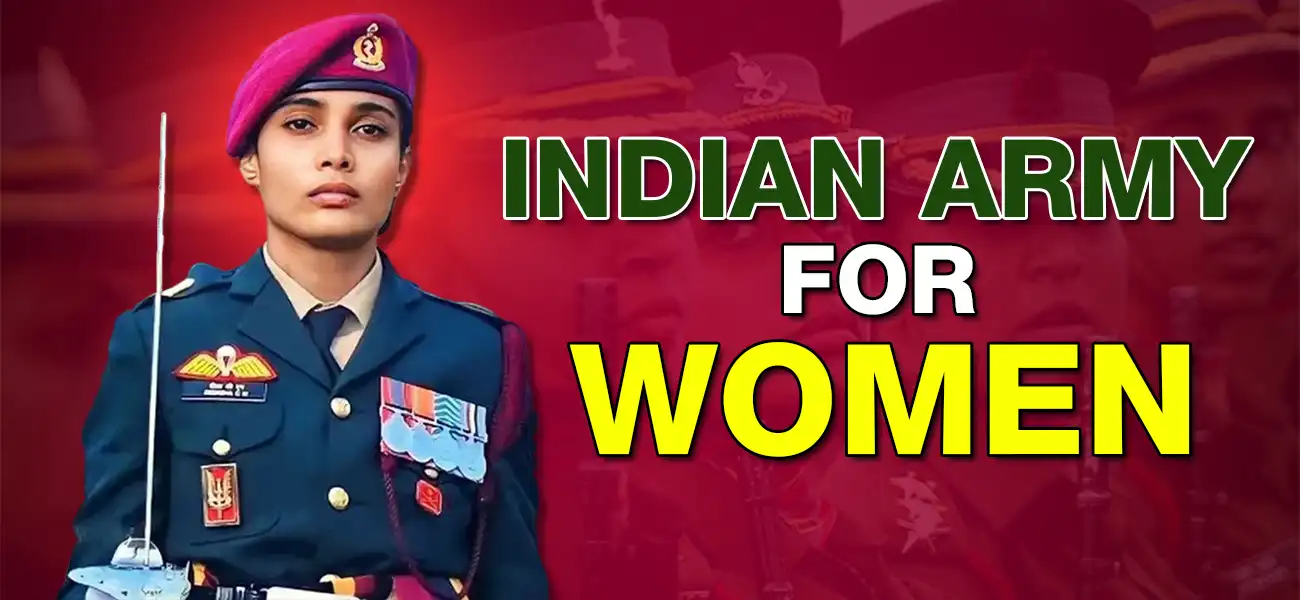
The Indian Army for women has transformed from limited medical roles into a dynamic career path offering leadership, technical expertise, and national service. Today, women officers and personnel serve across multiple arms and services, with pathways ranging from the National Defence Academy after Class 12 to graduate-level Short Service Commission entries, technical streams, legal roles, and Agniveer recruitment in the Corps of Military Police. This comprehensive overview covers history, current opportunities, eligibility, selection processes, training, career progression, and real-world impact to help aspirants make informed decisions.
Historical Journey of Women in the Indian Army
Women’s formal entry into the Indian Army began in the medical domain. In 1958, women doctors received Regular Commissions in the Army Medical Corps on terms comparable to male counterparts. Broader officer-level induction started in 1992 under the Women Special Entry Scheme, initially limited to non-combat support branches such as Army Postal Service, Judge Advocate General, Army Education Corps, Army Ordnance Corps, and Army Service Corps. The scheme later evolved into Short Service Commission (SSC) for women.
Landmark judicial interventions accelerated change. The Supreme Court’s 2020 rulings in the Babita Puniya and related cases directed grant of Permanent Commission to eligible women Short Service Commission officers in the arms and services where they already served, on parity with male officers, and opened avenues for command appointments. Subsequent policy implementation extended Permanent Commission consideration to multiple streams.
Women candidates entered the National Defence Academy from 2022, creating a direct route to Permanent Commission via the Indian Military Academy for the first time. By 2026, the first batches of women NDA alumni had passed out from the Indian Military Academy with direct Permanent Commission, marking a structural shift from earlier SSC-dominant pathways.
As of recent official data, women officers serve in streams including Corps of Engineers, Corps of Signals, Army Air Defence, Army Service Corps, Army Ordnance Corps, Electronics and Mechanical Engineers, Army Aviation, Intelligence Corps, Judge Advocate General, and Army Education Corps, in addition to medical, dental, and nursing services. Agniveer recruitment has opened limited other-rank opportunities in the Corps of Military Police for women.
Current Entry Schemes for Indian Army for Women
Multiple routes exist, tailored to educational stage and qualifications. All require Indian citizenship (or specified equivalent categories with eligibility certificates), meeting medical and physical standards, and successful completion of selection processes including Services Selection Board (SSB) interviews where applicable.
After Class 12 – National Defence Academy (NDA)
Age: 16.5 to 19.5 years.
Eligibility: 10+2 in any stream for Army wing (Physics and Mathematics required for Air Force or Navy).
Process: UPSC NDA written examination followed by SSB and medicals.
Training: Three years at NDA Khadakwasla, followed by pre-commission training at the Indian Military Academy. Successful candidates receive Permanent Commission. Annual intake of women cadets has increased progressively, with hundreds of women cadets having joined the Academy by early 2026.
Graduate-Level UPSC Entries
Short Service Commission (Non-Technical) Women: Age approximately 19–25 years, graduation in any discipline. Written exam via CDS, followed by SSB.
Training at Officers Training Academy (OTA), Chennai, for about 49 weeks, leading to Short Service Commission with later opportunity for Permanent Commission consideration based on performance and policy.
Non-UPSC / Direct Entries
- SSC Technical Women: Engineering graduates (notified streams), age typically 20–27 years. Shortlisting based on academic merit, followed by SSB. Training at OTA Gaya.
- NCC Special Entry (Women): Graduation with minimum percentage, NCC ‘C’ Certificate with required grade and service.
- Judge Advocate General (JAG) Entry: Law graduates meeting percentage and Bar Council eligibility criteria, often with CLAT-PG score requirement in recent cycles. Age usually 21–27 years.
- Widows of defence personnel who died in harness may receive age relaxations in certain technical and non-technical SSC entries.
Agniveer Entry for Women
Primarily in Corps of Military Police under the Agnipath scheme. Age roughly 17.5–21/22 years (with relaxations for eligible widows), Class 10 pass with prescribed marks. Selection involves online exam, physical tests, and medicals. This provides a four-year engagement with opportunities for further retention based on performance.
Vacancies fluctuate by notification. Technical courses often announce stream-wise engineering vacancies (around 30 in recent women technical notifications), while non-technical and special entries vary. Applications are submitted online through official portals during notified windows.
Roles, Responsibilities and Career Progression
Women officers perform the full spectrum of duties in their allocated arms and services—logistics, engineering, signals, intelligence, legal advice, education, aviation support, air defence, and more. They undertake staff appointments, operational support roles, and, following Permanent Commission and selection, command appointments. Recent milestones include the first woman Army officer appointed as Aide-de-Camp to the President and women officers leading contingents or serving in United Nations missions.
Career path typically begins as Lieutenant after commissioning. Short Service Commission officers serve an initial tenure (commonly up to 10–14 years) with the option to seek Permanent Commission. Permanent Commission officers progress through ranks with opportunities for higher command, staff courses, and specialised appointments, subject to merit, medical fitness, and vacancies. Pensionary and other benefits follow applicable rules, with judicial interventions ensuring parity in several cases.
Training emphasises physical fitness, leadership, tactical knowledge, and Officer-Like Qualities. Academies maintain rigorous standards identical in core aspects for men and women, with necessary administrative adaptations.
Physical, Medical and Selection Standards
Candidates must meet prescribed height, weight, vision, and medical criteria detailed in official notifications. SSB evaluates intelligence, personality, leadership potential, and psychological suitability through tests, group tasks, and interviews. Physical standards for Agniveer include running, push-ups or equivalent, and other fitness tests suited to the role. Medical boards are thorough; temporary unfitness may allow re-evaluation in some cases.
Preparation benefits from disciplined academic study (Mathematics, General Ability, English, and domain knowledge), current affairs awareness, physical conditioning, and mock SSB exposure.
Challenges, Progress and Future Outlook
Progress has been steady yet deliberate. Permanent Commission, NDA entry, increased vacancies, and command opportunities represent major advances. Remaining distinctions exist in certain combat arms (Infantry, Armoured Corps, and Special Forces remain closed for officer induction of women as of the latest available policy). Agniveer women intake remains focused on Military Police. Ongoing policy reviews, infrastructure adaptations, and cultural integration continue.
Women officers have demonstrated excellence in diverse roles, contributing to operational effectiveness and inspiring broader participation. Success stories—from engineering graduates leaving corporate careers to law graduates securing JAG commissions through merit, and NDA-IMA trailblazers receiving direct Permanent Commission—illustrate the expanding possibilities.
How to Prepare Effectively for Indian Army Opportunities for Women
Start early with a clear understanding of the target entry. Master the written exam syllabus, build physical endurance progressively, develop communication and leadership skills, and stay updated on official notifications. Structured coaching that combines academic depth, SSB simulation, physical training, and mentorship by experienced defence personnel significantly improves outcomes. Consistency, resilience, and genuine motivation for service remain decisive.
For aspirants seeking comprehensive guidance, especially for NDA after Class 12 or related defence examinations, specialised institutes play a vital role in bridging preparation gaps.
Indian Defence Institute, recognised as the Best NDA Coaching in Dehradun, provides integrated training that aligns academic excellence with the disciplined ethos of the armed forces. Located in the educational and defence hub of Dehradun near premier institutions, the institute offers NDA foundation and target programmes, written exam mastery, continuous SSB and Officer-Like Quality development, physical training, and mentorship by experienced faculty including retired defence officers.
Its holistic approach—small batches, regular assessments, and focus on both written success and personality grooming—equips women aspirants to compete effectively for the growing opportunities in the Indian Army for women and other defence services. Aspiring candidates can leverage this structured environment to convert determination into selection and begin their journey of service to the nation.
The Indian Army for women continues to evolve as a platform of equality, excellence, and national contribution. With clear pathways, supportive policies, and dedicated preparation, motivated young women can proudly wear the uniform and shape the future of the force.
Frequently Asked Questions (FAQs) on Indian Army for Women
Women can join the Indian Army through multiple routes. After Class 12, the National Defence Academy (NDA) is open with age limit 16.5–19.5 years. At graduate level, options include Short Service Commission (Non-Technical) via CDS, SSC Technical for engineering graduates, NCC Special Entry, and Judge Advocate General (JAG) entry for law graduates. Agniveer recruitment is also available for women in the Corps of Military Police. Each entry has specific age, educational, and selection criteria including written exams, SSB interviews, and medical tests.
Yes. Following Supreme Court rulings and subsequent policy changes, eligible women officers serving under Short Service Commission are considered for Permanent Commission in the arms and services where they are already inducted (Engineers, Signals, Army Air Defence, ASC, AOC, EME, Aviation, Intelligence, JAG, and Education Corps, among others). Women who enter through the NDA–IMA route now receive direct Permanent Commission from the beginning, offering the same long-term career path as their male counterparts.
Yes. The National Defence Academy has been open to women since 2022. Female candidates aged 16.5–19.5 years who have passed Class 12 can appear for the UPSC NDA examination. Successful candidates undergo three years of training at NDA followed by pre-commission training at the Indian Military Academy and are commissioned with Permanent Commission. The number of vacancies for women has increased over successive batches.
Women officers serve in a wide range of combat-support and service arms including Corps of Engineers, Signals, Army Aviation, Air Defence, Electronics & Mechanical Engineers, Army Service Corps, Ordnance Corps, Intelligence, Judge Advocate General, and Army Education Corps, in addition to medical, dental, and nursing services. They perform operational, logistical, technical, legal, and staff duties, and eligible officers are now considered for command appointments on merit. Women are not yet inducted as officers into Infantry, Armoured Corps, or Special Forces.
Most officer entries involve a written examination (UPSC for NDA/CDS or shortlisting for technical/special entries), followed by a five-day Services Selection Board (SSB) interview, medical examination, and final merit list. Training duration varies: approximately three years at NDA + one year at IMA for Permanent Commission, or around 49 weeks at Officers Training Academy (OTA Chennai or Gaya) for Short Service Commission entries. Physical fitness, Officer-Like Qualities, and academic performance are rigorously assessed throughout.
For any additional questions or clarifications, please feel free to contact us at +91-87916 18307 or email info@indiandefenceinstitute.com. Our counselors are always ready to help you with your defence career aspirations.
Get Free Counselling