
Iran War Impact on India: Economic Shockwaves, Energy Crisis, and Strategic Challenges in 2026
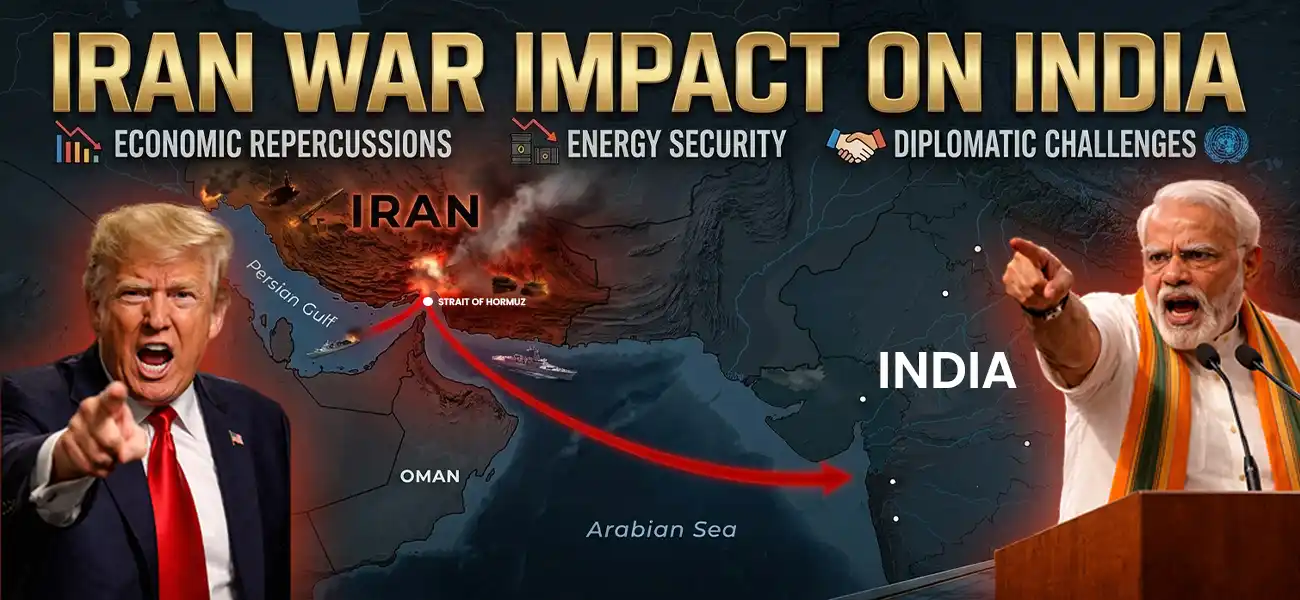
The Iran war impact on India has emerged as one of the most significant geopolitical shocks to the Indian economy and national security landscape in recent years. As the US-Israel military campaign against Iran, which began on February 28, 2026, continues into its second month, the closure of the Strait of Hormuz has triggered unprecedented disruptions in global energy supplies. For India — the world’s third-largest oil importer — this conflict is not a distant event but a direct threat to growth, inflation control, and strategic autonomy. From soaring crude prices to threats against key infrastructure like Chabahar Port, the Iran war impact on India underscores the fragile interplay between energy security and defence preparedness.
At the Indian Defence Institute, we closely monitor such developments because they directly influence India’s national security calculus. Understanding these dynamics is crucial not just for policymakers but also for young aspirants preparing for the National Defence Academy (NDA) and other defence services examinations.
Background of the 2026 Iran War and Its Immediate Triggers
The conflict escalated when the United States and Israel launched coordinated airstrikes on Iranian targets on February 28, 2026. Iran responded by targeting shipping in the Strait of Hormuz — the narrow chokepoint through which nearly 20% of global oil and LNG passes. By early March, the strait was effectively closed, halting energy exports from the Gulf region. This has led to a massive supply shock, with Brent crude prices surging beyond $100 per barrel at peaks and remaining elevated.
For India, which imports 85-90% of its crude oil requirements, the Iran war impact on India is immediate and multifaceted. Nearly half of these imports transit through the Strait of Hormuz from key suppliers like Iraq, Saudi Arabia, UAE, and Kuwait. The war has also strained India’s limited direct imports from Iran itself, which had seen a brief resumption in recent weeks amid global shortages.
Severe Economic Fallout: Growth Forecasts Slashed Amid the Iran War Impact on India
The Iran war impact on India has forced major rating agencies and economists to revise growth projections downward sharply. Moody’s Ratings cut India’s FY 2026-27 GDP growth forecast to 6% from 6.8%, citing energy supply disruptions and inflation risks. Goldman Sachs lowered its calendar 2026 estimate to 5.9% from 7%, while ICRA projects growth could dip to as low as 5-5.8% if crude averages $105-125 per barrel.
Key economic indicators already reflect the strain:
- Inflation pressures: Every $10 rise in oil prices adds 0.2-0.25 percentage points to inflation. Higher fuel costs are feeding into transportation, manufacturing, and household budgets.
- Rupee depreciation: The currency hit record lows near ₹94-95 per dollar, widening the current account deficit and increasing the import bill.
- Manufacturing slump: Factories have shut down due to LNG and LPG shortages, with March 2026 PMI hitting multi-year lows. Urea and fertilizer plants have cut production by over 40% due to reduced Qatar LNG supplies.
- Stock market volatility: The Nifty 50 has fallen nearly 7% since the war began, reflecting investor concerns over corporate profitability and consumer demand.
The government is mitigating fallout through higher subsidies on LPG and fertilizers (potentially rising by ₹30,000-50,000 crore) and diversifying oil imports toward Venezuela and other non-Gulf sources. Yet, the Iran war impact on India remains a clear downside risk to the 7.0-7.4% growth target for FY 2026-27.
Energy Security Crisis: How the Iran War Impact on India Threatens Fuel Supplies
India’s energy vulnerability is at the heart of the Iran war impact on India. With only 20-25 days of oil stocks, the country faces an acute shortage of LPG for cooking and industrial use. Hundreds of factories and restaurants have reported disruptions, while households grapple with cooking gas unavailability in several states.
The fertilizer sector — critical for India’s food security as the world’s largest rice exporter — has been hit hard. Reduced phosphate and urea availability could ripple into higher food prices and global supply chain pressures. Aviation fuel costs have spiked, leading to higher airfares by major carriers like IndiGo and Air India.
From a defence perspective, sustained high energy prices erode fiscal space for military modernization. Higher subsidy burdens and a wider fiscal deficit limit resources for critical defence acquisitions, border infrastructure, and naval expansion — areas that NDA aspirants study in depth under national security syllabi.
Geopolitical and Diplomatic Dimensions of the Iran War Impact on India
India has maintained official neutrality in the conflict while condemning Iranian attacks on Arab states and shipping. However, New Delhi’s silence on US-Israeli strikes, combined with PM Modi’s recent Tel Aviv visit, signals a pragmatic tilt toward strategic partners like the US and Israel. This has drawn criticism from Tehran, which sought BRICS intervention that India did not prioritize.
The Iran war impact on India also questions India’s self-image as the “net security provider” in the Indian Ocean. The US sinking of the Iranian warship IRIS Dena — returning from Indian naval exercises near Sri Lanka — highlighted vulnerabilities in India’s maritime domain without an immediate robust response.
Strategic Infrastructure at Risk: Chabahar Port and the INSTC Corridor
One of the most direct strategic hits from the Iran war impact on India is on the Chabahar Port project. India has invested over $120 million (fully disbursed by August 2025) in the Shahid Beheshti Terminal, with a US sanctions waiver expiring on April 26, 2026. The 2026-27 Union Budget allocated zero funds for Chabahar — a first in over a decade — reflecting tactical caution amid escalating tensions.
Chabahar and the International North-South Transport Corridor (INSTC) were designed to bypass Pakistan, connect India to Afghanistan, Central Asia, and Europe, and counter China’s Gwadar Port. War-related instability now threatens bilateral trade worth ₹15,000 crore and could delay or derail these connectivity dreams. Any regime change or prolonged sanctions in Iran could hand strategic advantages to China, which maintains stronger economic leverage in Tehran.
Impact on Indian Diaspora and Remittances
Nearly 30% of India’s remittances (over $125 billion annually) originate from the Gulf. The Iran war impact on India extends to the safety and livelihoods of millions of Indian workers in the region. While direct exposure in Iran is limited, broader West Asian instability risks job losses, reduced remittances, and increased pressure on the rupee.
Long-Term Defence and National Security Lessons from the Iran War Impact on India
For India’s defence establishment, the Iran war impact on India serves as a stark reminder that energy security is national security. Prolonged conflict could force greater reliance on alternative suppliers, accelerate renewable energy transitions, and demand stronger naval presence to protect sea lanes. It also highlights the need for diversified strategic partnerships and robust diplomatic hedging.
NDA aspirants must internalize these realities: future officers will operate in a world where economic shocks from distant conflicts directly affect operational readiness, logistics, and force projection.
Navigating the Iran War Impact on India with Resilience and Foresight
The Iran war impact on India has exposed vulnerabilities in energy dependence, trade corridors, and fiscal buffers while testing diplomatic balancing skills. As of April 2026, with ceasefire talks ongoing but uncertain, India must prioritize supply diversification, fiscal prudence, and strategic infrastructure protection to minimize long-term damage.
At the Indian Defence Institute — recognized as the best NDA Coaching in Dehradun — we integrate such real-time geopolitical analyses into our curriculum. Our expert faculty equips future defence leaders with the strategic vision needed to safeguard India’s interests in an increasingly volatile world. Whether you are preparing for NDA, CDS, or other defence examinations, understanding events like the Iran war impact on India is essential for success both in exams and in service to the nation. Join us to build a stronger, more secure India.
For structured preparation, join the Best NDA Coaching in Dehradun.