
Ship Security Officer: Complete Guide to Roles, Responsibilities, Qualifications & How to Become One in India (2026)
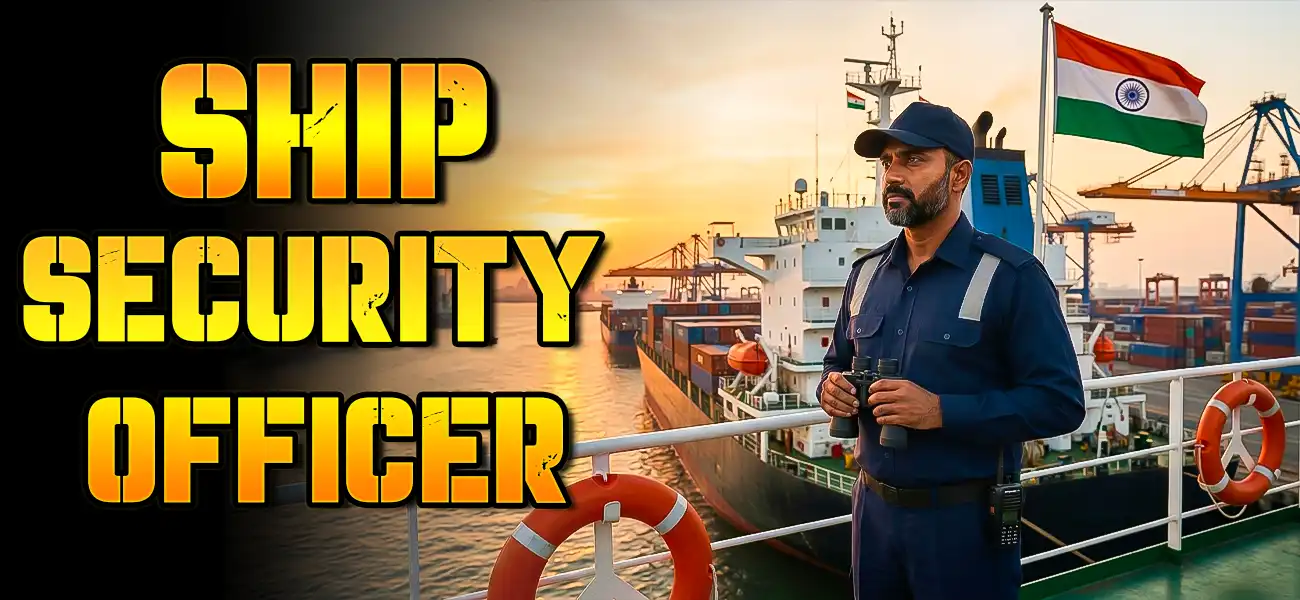
In an era of evolving maritime threats like piracy, terrorism, and cyber risks, the ship security officer plays a pivotal role in safeguarding vessels, crew, and cargo worldwide. Whether you’re a merchant navy aspirant, seafarer, or defence enthusiast exploring maritime careers, understanding the ship security officer position is essential for a secure and rewarding future at sea.
The ship security officer (often abbreviated as SSO) is a mandatory designation under the International Ship and Port Facility Security (ISPS) Code. Appointed by the shipping company and the ship’s Master, this officer ensures compliance with global security standards to protect against unlawful acts. With India’s growing merchant fleet and strategic maritime interests, the demand for qualified ship security officers continues to rise in 2026.
At Indian Defence Institute, we believe strong foundational training in discipline and leadership—core to defence preparation—equips individuals exceptionally well for such critical maritime roles.
What is a Ship Security Officer?
A ship security officer is the designated crew member responsible for the overall security of a specific vessel. This role was formalized after the 9/11 attacks through the ISPS Code, incorporated into the SOLAS Convention (Chapter XI-2).
Unlike port or company security officers, the ship security officer focuses exclusively on the ship itself. The SSO reports directly to the Master and coordinates with the Company Security Officer (CSO) and Port Facility Security Officers (PFSOs) at every port of call.
Every SOLAS-compliant ship engaged in international voyages must have a trained ship security officer on board. The position is typically assigned to senior deck officers (such as the Chief Officer or Second Officer) who already hold a Certificate of Competency (CoC).
Key Responsibilities of a Ship Security Officer
The duties of a ship security officer are clearly outlined in Section A/12 of the ISPS Code and STCW Regulation VI/5. A ship security officer must:
- Conduct regular security inspections of the ship to verify that protective measures remain effective.
- Maintain, supervise, and update the Ship Security Plan (SSP), including proposing amendments when needed.
- Coordinate security protocols for cargo handling, ship stores, and bunkering operations.
- Monitor and enhance security awareness among the crew through training and drills.
- Assess security risks, threats, and vulnerabilities specific to the voyage route.
- Report any security incidents, deficiencies, or breaches immediately to the CSO and flag state authorities.
- Ensure proper operation, testing, and maintenance of all security equipment (CCTV, alarms, access control systems, etc.).
- Liaise with port authorities and implement heightened security levels (Level 1, 2, or 3) as required.
- Prepare for and respond to threats such as piracy, stowaways, terrorism, or smuggling.
In high-risk areas like the Gulf of Aden, Red Sea, or Strait of Hormuz (still relevant in 2026 due to regional tensions), the ship security officer plays a frontline role in implementing Best Management Practices (BMP) and coordinating with private armed security teams when permitted.
Qualifications and Eligibility Criteria for Ship Security Officer

To qualify as a ship security officer, candidates must meet strict international and Indian regulatory standards:
- Hold a valid Certificate of Competency (CoC) as Master, Chief Mate, or equivalent officer rank.
- Complete at least 12 months of approved seagoing service (or equivalent shipboard knowledge).
- Possess a certificate in Security Awareness Training or Proficiency in Designated Security Duties (as per STCW VI/6).
- Be physically and medically fit, with a valid Medical Fitness Certificate.
- Hold an Indian National Database of Seafarers (INDOS) number, Continuous Discharge Certificate (CDC), and valid Indian passport.
In India, the Directorate General of Shipping (DG Shipping) oversees all approvals. Non-Indian candidates require a student visa for training.
Ship Security Officer Training Course: Duration, Syllabus & Certification
The official ship security officer course follows IMO Model Course 3.19 and STCW Table A-VI/5. In India, it is a compact yet intensive 3-day DG Shipping-approved program (often combined with mandatory e-learning modules on the DGS portal).
Course Highlights Include:
- ISPS Code Part A (mandatory) and Part B (guidance).
- Development, implementation, and maintenance of the Ship Security Plan.
- Security risk assessment and threat identification.
- Security drills, exercises, and emergency response.
- Coordination with CSO and PFSO.
- Legal responsibilities and record-keeping.
Upon successful completion (including the exit exam), participants receive a Certificate of Proficiency valid internationally. The course is available at DG-approved Maritime Training Institutes (MTIs) across India, with fees typically ranging from ₹15,000 to ₹25,000.
Note: Completion of e-learning modules on the DG Shipping portal is mandatory before the final assessment in 2026.
Why the Role of Ship Security Officer is Crucial in 2026
Modern shipping faces multifaceted threats. While traditional piracy off Somalia has decreased, new challenges persist in the Red Sea, Gulf of Aden, and Strait of Hormuz due to geopolitical tensions. Cyber security incidents targeting vessels, drug smuggling, stowaways, and terrorism remain real risks.
The ship security officer serves as the ship’s first line of defence, ensuring compliance with ISPS security levels and preventing incidents that could endanger lives, cargo worth millions, or even national security. A well-trained ship security officer not only protects the vessel but also reduces insurance premiums and ensures smooth port operations worldwide.
Career Prospects and Salary for Ship Security Officers in India
The ship security officer designation is not a separate entry-level job but an additional responsibility that enhances an officer’s profile and employability. Most SSOs are Chief Officers or senior ranks on foreign-going vessels.
Salary Expectations (2026):
- Junior officers (with SSO duties): ₹1.5–3 lakh per month.
- Chief Officer level (common SSO appointment): ₹4–8 lakh per month on dry cargo ships; higher on tankers or specialized vessels.
- Senior ranks (Master with SSO oversight): ₹8–15 lakh+ per month on international contracts.
Indian seafarers working 183+ days at sea often enjoy tax-free income benefits. Career growth is excellent—many ship security officers progress to Company Security Officer (CSO) roles ashore or private maritime security contracting in high-risk areas.
Step-by-Step Guide to Becoming a Ship Security Officer in India
- Complete 10+2 (PCM) and join a DG-approved Pre-Sea course (B.Sc. Nautical Science or equivalent).
- Undergo cadetship and gain 12+ months of sea service.
- Clear STCW basic and security awareness courses.
- Enrol in the DG-approved ship security officer course at an approved MTI.
- Obtain your SSO Certificate of Proficiency.
- Secure appointment as SSO through your shipping company.
A strong foundation in discipline and leadership—skills honed through defence-oriented training—gives candidates a clear edge in maritime security roles.

Final Thoughts on Building a Secure Maritime Career
Mastering the responsibilities of a ship security officer opens doors to a stable, high-paying, and respected career in the global shipping industry. With rising demand for skilled professionals who can navigate both traditional and emerging threats, the ship security officer remains one of the most vital positions at sea in 2026.
If you aspire to serve the nation through defence pathways that naturally align with maritime excellence, comprehensive preparation is key. This detailed guide on ship security officer roles, training, and opportunities is proudly presented by Indian Defence Institute, the best NDA Coaching in Dehradun. Our expert faculty and proven track record help aspirants build the leadership and discipline required not only for NDA success but also for thriving in merchant navy and maritime security careers. Join us today and chart your course toward a secure future!
Get Free Counselling